


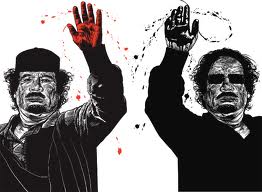
 Printed on gilt-edged card embossed with the Royal coat of arms, the invitation from Britain’s man in Tripoli was to the social highlight of the diplomatic calendar. “On the occasion of the Birthday of Her Majesty Queen Elizabeth II, Her Britannic Majesty’s Ambassador… requests the pleasure of the company of His Excellency Captain Khamis al Qadhafi at a reception on Wednesday, 16 June, 2010.” This was how Britain’s then ambassador to Libya, Richard Northern, extended the VIP treatment to Colonel Gaddafi’s feared fifth son at last year’s annual party in the ambassador’s residence overlooking Tripoli’s palm-lined seafront. With 32 other invitees from the cream of the Libyan military, Khamis would have mixed with guests on the well-kept lawn, and been offered wine or Pimm’s — a rare diplomatic perk in a land whose ruler banned alcohol as a threat to “revolutionary society”. Yet the rolling out of the red carpet to Col Gaddafi’s security establishment was no routine diplomatic courtesy. Documents found by The Sunday Telegraph in the now-abandoned embassy building show that Khamis and his sidekicks were on the guest list not at the behest of Mr Northern, but at the suggestion of the United Kingdom Trade and Industry Defence and Security Organisation (DSO), a Government unit dedicated to promoting British arms exports. The Khamis Brigade, named after its commander-in-chief and staffed by hard-core Gaddafi loyalists, had proved a lucrative customer. In 2007, on the sidelines of the infamous “tent deal” between Tony Blair and Col Gaddafi in the Libyan desert, which paved the way for the Lockerbie bomber’s release, the Brigade signed an £85 million contract for a state-of-the-art command and control system from General Dynamics UK, which installed a similar one for the British Army. The contract, which had Mr Blair’s personal backing, went through despite Khamis being a man whose company generally brought very little “pleasure” to anyone, save, perhaps, for arms dealers. Rebels certain that Khamis Gaddafi is dead 04 Sep 2011 Like the rest of Gaddafi’s immediate clan, he was a figure of fear among ordinary Libyans, who saw him as a hard man being groomed to take over from his father. Diplomats, meanwhile, had long known that his 10,000-strong unit — far better equipped than the rest of Libya’s army — was there to keep the First Family in power at all costs. That assessment proved horrifyingly accurate when the Libyan uprising began in February, as the Khamis Brigade led attempts to crush rebellions in the cities of Benghazi and Misurata. As the fighting spread to Tripoli last month, the brigade appears to have resorted to all-out terror, culminating in the summary execution of at least 45 prisoners at a warehouse near its barracks on Aug 23. “Four soldiers climbed on the top of the warehouse, and another soldier opened the door. They started shooting at us,” said Abdulrahim Ibrahim Bashir, who escaped while the brigade reloaded. “The guy at the door was throwing in grenades. After I escaped, I saw one of the soldiers finish off anyone who was wounded.” Khamis eventually had a taste of his own medicine: after fleeing south from Tripoli, he is thought to have been killed when an Apache helicopter fired a rocket at his armoured car near the town of Bani Walid. Had he remained on the run, the next organisation seeking the pleasure of his company would have been The Hague war crimes court, which is already investigating the warehouse massacre and several other mass graves found near his brigade’s HQ. In the course of that inquiry, there may be questions about why Britain deemed it fit to equip a unit whose name suggested it was a private militia. Last week, a spokesman for the DSO insisted it “did not export equipment where there is a clear risk it could be used for internal repression”. But critics allege that, just as in the case of the Lockerbie bomber, Abdelbaset al-Megrahi, whose release in 2009 was linked to lucrative oil deals, the rush to do business with Gaddafi’s regime overrode ethical concerns. Correspondence found in the embassy, which was ransacked and torched by a pro-Gaddafi mob in May, shows the extraordinary extent to which Britain courted the unit. The General Dynamics contract opened up a new era of close co-operation with the Libyan military, including SAS training for the Khamis Brigade, plans for courses at Sandhurst, trips by British generals to meet Khamis in Libya and taxpayer-funded invitations to the Farnborough Air Show for other Gaddafi military chiefs, with accommodation in five-star London hotels. The documents even show that civil servants advised Khamis on how to block a Freedom of Information request about an invitation to a British arms fair. Nowhere is the eagerness to please more apparent on the British side than in touting the services of the SAS. As with nearly every strongman regime in the Middle East, Britain’s Special Forces long had an appeal for Libya’s elite, who appear to have been as seduced as anyone by their “Who Dares Wins” reputation. Documents show that within a year of signing the General Dynamics contract, MoD officials at the highest rank were fielding queries from Gaddafi’s second son, Saif, about Libyan servicemen attending the SAS’s notoriously tough “selection” course. In a June 2008 letter marked “Restricted — UK/Libya Eyes only”, Maj Gen Robin Searby, the Prime Minister’s defence coordinator to Libya, informed Saif that “regrettably” the course was off-limits to foreigners, and offered him a proposal from a private firm, Arlington Associates, run by two ex-SAS officers. By January 2009, though, clearance had been given for the SAS to train 50 Libyans, including members of the Khamis Brigade, in weapons skills, field craft and “counter-terrorism”. Last week, Maj Gen Searby defended the programme. “There was no reason for the British Government not to be involved with Libya at the time, as it was felt that it was better to have them inside the tent rather than outside,” he told The Sunday Telegraph. He said it had been justified on the basis that the Libyans were woefully behind in counter-terrorism tactics. Yet “terrorism” was always a rather loose term in Gaddafi’s Libya; during first month of the uprising, he branded the rebel movement “al-Qaeda agents”. Maj Gen Searby added that the programme was eventually abandoned, as the Libyan soldiers “were not up to it”. Yet the high-level contacts continued nonetheless. Another military delegation was scheduled to see Khamis in April last year, this time including the chief executive of the DSO, Richard Paniguian, who reported to the then business secretary, Lord Mandelson. Mr Paniguian’s previous job was as vice-president for the Middle East and Africa for BP, which has admitted lobbying for the prisoner transfer agreement that led to Mr Megrahi’s release. In a private speech in September 2009, obtained by the Campaign Against Arms Trade under the Freedom of Information Act, Mr Paniguian boasted that “high-level political interventions” had enhanced the prospect of arms sales to Libya. In general, though, the DSO seems to have been adept at keeping its Libya dealings secret — in particular, an invitation sent to Khamis Gaddafi to attend the 2009 Defence and Security Exhibition in London. A letter from Graham Inett, the embassy’s defence attache, warned Tripoli that the Campaign Against Arms Trade had requested the names of all overseas delegates under an FOI request, and asked if Khamis was “content for this information to be disclosed”. Mr Inett added: “If you are not content, I would ask that you provide me with a formal statement with the reasons, as this will help strengthen the case against release.” It is perhaps no surprise to learn that the FOI request was turned down, on the basis that naming delegates without their approval “could prejudice Government’s ability to conduct similar business with them in future”. Only as the “Arab Spring” blossomed this year did relations between the Libyans and their British quartermasters wilt. In a letter to Tripoli in February, Dr AD Wilson, the head of General Dynamics, railed against a letter of complaint from 32 Brigade, which accused his firm of being behind schedule. A clue for 32 Brigade’s impatience may lie in the date of its letter: January 15. The day before, the president of neighbouring Tunisia, Zine el Abidine Ben Ali, had fled: the first casualty of the revolt that then crossed into Libya. Soon British planes would be flying sorties against the very units that the British government had helped to train and arm. Share: inShare 4 Libya News News » World News » Africa and Indian Ocean » Colin Freeman » IN LIBYA NEWS Battle for Gaddafi's stronghold Sirte First footage of 'dead' Gaddafi daughter NTC taking time 'to do the right thing' Gaddafi: Libyan National Transitional Council is 'void and illegitimate' Anti-Gaddafi fighters gather near Sirte
 Fighters for Libya's interim rulers entered Muammar Gaddafi's hometown Sirte on Saturday in a surprise assault that NATO said it backed to halt brutal acts by followers of the ousted regime. National Transitional Council (NTC) chief Mustafa Abdel Jalil said an interim government would be announced next week and that the new authorities had control over Gaddafi 's internationally "banned weapons". Misrata military council spokesman Abdel Ibrahim said seven NTC fighters were killed and 145 injured in what appeared to have been a pincer movement launched from the south and east. Using tanks and pick-up trucks mounted with anti-aircraft guns, the NTC forces cleared away roadblocks set up by Kadhafi forces and drove toward the city centre before putting up their own defences in advanced positions. On a beach road surrounded by craters and pock-marked buildings, a 106mm anti-tank cannon repeatedly pounded Gaddafi positions, backed by a barrage of mortars and multiple rocket-launchers. "We are pushing them back" after a "surprise" order to attack issued by the NTC's military top brass, commander Mohammed al-Aswawi said in a radio truck monitoring units on the front. "First we get the families out, and then the order is to attack and free Sirte," he told AFP. "There is also an advance from the south," he added, as the Misrata Military Council said that front was being reinforced by NTC fighters who had taken part in "the liberation of Al-Jafra." Frontline fighters in Sirte are convinced that one of Gaddafi's sons, Mutassim, is holed up in the city's southern outskirts. "Mutassim is in there. We hear him on the radio giving orders," NTC operations commander Osama Muttawa Swehly told AFP on Saturday. As the battle raged into the evening, another commander, Hassan Tarhar Zaluk, said NTC forces would have to resume the fight for Sirte on Sunday. "We're going to stop for the evening. There's no light in there. We'll start again tomorrow," he said. NTC fighters also came under heavy fire as they advanced inside Sirte's eastern gates, another AFP correspondent reported. "Our troops went seven kilometres inside through the eastern gate and there were sporadic to sometimes heavy clashes with Gaddafi's forces," said commander Mohammed al-Marimi of the Fakriddin Sallabi Brigade. The assault was launched after reports of a rapidly deteriorating humanitarian situation in the city of around 75,000 inhabitants. NATO forces struck at Gaddafi forces after reports they had moved against civilians there, endangering "hundreds of families", a statement from the alliance said. "Among the reports emerging from Sirte are executions, hostage-taking, and the calculated targeting of individuals, families, and communities within the city," it added. Heavy fighting also raged in Bani Walid, the only other remaining pro-Gaddafi bastion. Medics reported a total of 30 NTC troops killed so far on that front. A pro-Gaddafi radio station called for a gathering at one of Bani Walid's squares, after a similar call from Gaddafi's most prominent son, Seif al-Islam, for people to rise up for the town's "liberation". On the political front, the NTC held talks on forming a new government amid doubts over whether disagreements that prevented a deal last week could be immediately overcome. "Differences in views" between members of the NTC and the executive council had delayed a deal, Abdel Jalil told reporters, but the composition of the interim government would be announced in the coming week. That had been due to be set up last Sunday, but was postponed indefinitely because of haggling over portfolios. Abdel Jalil said the new authorities had control over internationally "banned weapons" from Gaddafi's regime, when asked about the presence of such weapons in the south. The International Atomic Energy Agency on Friday confirmed the existence of raw uranium stored in drums at the southern city of Sabha. "These weapons are between Waddan and Sabha," said Abdel Jalil, referring to the other central town. "We will call for Libyan technicians and the international community to get rid of these weapons safely," he said. While Libya's new authorities do not know where Gaddafi is, they are focusing on taking Sirte and Bani Walid, two places where some think he might be. Reports have also emerged that he may be in the south. "General Belgasem al-Abaaj, who we captured on Monday, said that Gaddafi had contacted him by phone about 10 days ago, and that he was moving secretly between (the oases of) Sabha and Ghat," an NTC commander, Mohammed Barka Wardugu, told AFP. Abaaj had said Gaddafi "is helped by Nigerian and Chadian mercenaries who know the desert routes," added Wardugu, spokesman for the Desert Shield Brigade. Friday's statement from Gaddafi's daughter Aisha that said her father was well and fighting on the ground -- and denouncing the new administration in Libya as traitors -- got a sharp reaction from the Algerian authorities. Algerian Foreign Minister Mourad Mdeleci described her comments as "unacceptable", the country's APS agency reported. Her telephone message was broadcast by Syria-based Arrai television. Algeria received Aisha Gaddafi, her mother and other members of their family when they fled Libya in August. Algeria, which after criticism from the NTC in Libya defended its decision to receive the Gaddafis on humanitarian grounds, on Friday said it was willing to work with the new administration. In New York, NTC prime minister Mahmoud Jibril told the United Nations General Assembly that a new Libya was coming to life. But he added: "The asset freeze on our funds must be lifted as urgently as possible."
 The National Transitional Council are investigating an unconfirmed report that Muammar Gaddafi has fled from Sabha, NTC spokesman reports. NTC spokesman also states that Libyan government forces now control most of Sabha with small pockets of resistance from pro-Gaddafi snipers.
 Fugitive Libyan leader Muammar Gadhafi was spotted in the southern city of Sabha a few days ago, the regional daily Asharq al-Awsat reported on Tuesday, citing an eyewitness. The witness claimed that Gadhafi was living in the city, located around 750 kilometers south of the capital Tripoli. Anti-Gadhafi fighters firing a cannon near Sirte, the hometown of deposed leader Muammar Gadhafi, September 17, 2011. Photo by: Reuters Gadhafi's whereabouts have been unknown since rebels took over Tripoli in August. However, he continues to send statements and voice messages through the Syria-based al-Rai channel. The report comes after the anti-Gadhafi rebels said they took over parts of Sabha city as well as its airport. "The airport of Sabha has been liberated by our fighters," a military spokesman, Colonel Ahmed Bani, said in Tripoli on Monday. "Also two villages near Sabha have been liberated." For around a week the rebels have been fighting pro-Gadhafi fighters, who have put up stiff resistance in his birthplace of Sirte and the desert town of Bani Walid, south-east of Tripoli. Almost a month after they overran Tripoli, the rebels are at pains to take control of the two strongholds before their leaders can declare all of the North African country "liberated."
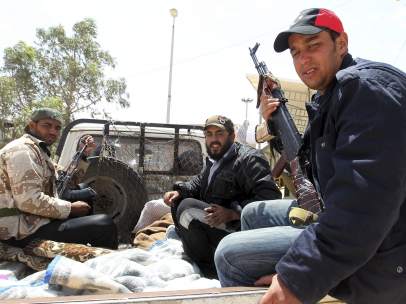 Libyan interim government forces fled on Sunday in a chaotic retreat from the town of Bani Walid, after failing in yet another attempt to storm the final bastions of loyalists of ousted leader Muammar Gaddafi. Since taking the capital Tripoli last month, motley forces of the ruling National Transitional Council have met stiff resistance in Bani Walid and Gaddafi’s birthplace Sirte, which they must capture before they can declare Libya “liberated.” Anti-Gaddafi fighters have tried many times to storm Bani Walid, 150 km southeast of Tripoli, only to retreat in disorder under fire from defenders. Sunday’s failed attempt appeared to be among the worst yet, setting off angry recriminations among attackers. NTC fighters said they had planned for tanks and pickup trucks with anti-aircraft guns and rocket launchers to lead Sunday’s attack, but foot soldiers had piled in first. “There is a lack of organisation so far. Infantry men are running in all directions,” said Zakaria Tuham, a senior fighter with a Tripoli-based unit. “Our commanders had been told that heavy artillery units had already gone ahead, but when we advanced into Bani Walid they were nowhere to be seen. “Gaddafi forces were hitting us heavily with rockets and mortars, so we have pulled out.” A Reuters reporter saw fighters withdraw around two km (more than a mile) after they had stormed into the town. Anti-Gaddafi fighters from Bani Walid blamed comrades from elsewhere in Libya for being unwilling to coordinate. Those from elsewhere accused some local fighters of being traitors and passing information to Gaddafi loyalists. “Commanders who are from the Warfalla tribe, they tell us one thing and then commanders from the other cities say something else. We do not understand anything,” said pro-NTC fighter Mohamed Saleh. “So we are just going in and pulling back without a single purpose. It’s impossible to take this city this way. It will continue like this until they send more experienced troops....”
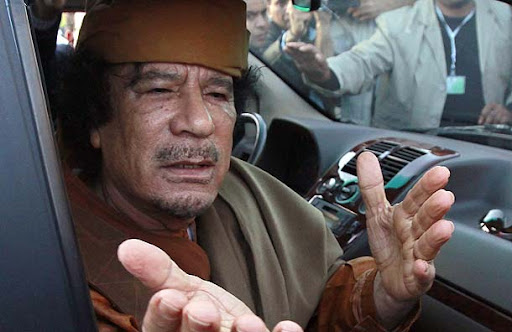 former prime minister arranged to fly to Tripoli on Colonel Gaddafi's private jet for secret talks in June 2008 and April 2009. Tony Blair insists his talks with Colonel Gaddafi were not about Abdelbaset al-Megrahi (Getty Images) The Scottish government released Megrahi - the man convicted of the bombing of Pan Am Flight 103 - on compassionate grounds in August 2009 as he was suffering from prostate cancer. It is known the then Libyan dictator threatened to cut trade ties with the UK in 2008 unless Megrahi was freed. Emailed exchanges between Mr Blair's office, Libya's embassy in London and Sir Vincent Fean, the former British ambassador in Tripoli, suggested the ex-prime minister met officials from the Libyan Investment Authority, as well as Colonel Gaddafi. A spokesman for Mr Blair said there was nothing untoward about the meetings and that he played no part in the release of Megrahi. 'The subjects of the conversations during Mr Blair's occasional visits was primarily Africa, as Libya was for a time head of the African Union; but also the Middle East and how Libya should reform and open up,' he said. 'Of course the Libyans, as they always did, raised Megrahi. Mr Blair explained, as he always did, in office and out of it, that it was not a decision for the UK government but for the Scottish Executive.' The spokesman added the former prime minister had no commercial relationship with the Libyan government.
 LIBYAN rebels loyal to the National Transitional Council (NTC) are struggling to regroup outside Bani Walid after being driven back by fierce resistance from followers of Muammar Gaddafi. There were no signs of anti-Gaddafi forces mobilising for another assault on the mountain enclave, about 140km southeast of Tripoli. The NTC fighters withdrew after facing sniper fire and shelling from pro-Gaddafi units holding strategic positions above the valley entrance to the town. Meanwhile, more families fled Bani Walid. The fighting coincided with another NTC offensive into Gaddafi's hometown Sirte on the Mediterranean coast, where there were stiff counterattacks by backers of the old regime. Dubai-based broadcaster al-Arabiya said Gaddafi supporters were still holding out in Sirte and there was no sign yet of a rapid end to a siege which has been dragging on for weeks. Related Coverage Libyan fighters blitz Gaddafi strongholds Herald Sun, 1 day ago Cameron, Sarkozy plan Libya visit Herald Sun, 2 days ago Rebels close in on Gaddafi holdouts The Australian, 5 days ago Libyan rebels delay assault on Bani Walid Herald Sun, 5 days ago Gaddafi forces ambush NTC fighters The Daily Telegraph, 5 days ago TNC forces seized the airport on the outskirts of Sirte and moved towards the centre of the city. Gaddafi's troops were stationed between houses and dozens of snipers were positioned on the roofs, according to rebel fighters quoted by al-Arabiya. Gaddafi's spokesman Moussa Ibrahim was prompt in praising the setback their forces had inflicted on the rebels. "We gathered arms and equipment in preparation for a long war,'' he told Syria-based Al-Rai television. "The battle is far from over,'' Ibrahim continued. "We assure everybody that the Sirte and Bani Walid fronts are strong, despite the heavy, unbelievable and merciless NATO bombardment on hospitals, families and schools.'' Gaddafi has not been seen in public since the rebels captured Tripoli in August, although his spokesman has repeatedly claimed that he is still in Libya.
 Neither Gaddafi nor any of his sons were on the convoy that arrived in Niger from Libya. The statement was made by Niger Foreign Minister, Mohammed Bazoum, on the microphones of Al Arabiya.& 13; The news was leaked by sources of the National Transational Council, according to which the 200-250 vehicle convoy that crossed the Fezzan desert to reach the ciy of Agadez, escorted by local security forces, carried an enormous load of gold and cash as well as several members of Gaddafi's family. "None of this is true", Bazoum said, cutting short, "it isn't Gaddafi and nor do I think that the convoy was as large as reported". In his opinion, the convoy carried former officials of Gaddafi's regime, although of intermediate ranking: this therefore also appears to deny the presence on the convoy of Mansour Daw, the chief of the Colonel's security forces. & 13; Also France, the former colonial power of the sub-Saharan Country, denied rumors concerning Gaddafi: "We have no information enabling us to think that Colonel Gaddafi is on that convoy", reiterated a spokesperson of the Elysee
 The documents revealing the cosy relationship between top British and Libyan intelligence officials are embarrassing not just because they confirm Britain's rendition of Islamist terror suspects, including Abdel Hakim Belhadj, the Transitional National Council's new security commander in Tripoli, but also because they lend credence to Britain's reputation as a slippery operator in the Middle East. David Cameron's support for the TNC was meant to gain souk cred by tying Britain's banner to the spirit of the Arab Spring. Cameron has said the new documents should be examined by the independent Detainee Inquiry, chaired by Sir Peter Gibson. They show how keen Tony Blair was to bring Gaddafi into the fold following Saddam Hussein's fall in April 2003 and to trade an end to Libya's pariah status in return for help in the war against terrorism. There was little wrong with that. What is sickening is the extent to which Britain sought to ingratiate itself by delivering up Gaddafi's opponents. No less disturbing is the manner in which Britain's cosying up to Gaddafi has been represented as a mistake by misguided individuals, for which institutions such as the London School of Economics have suffered. Perhaps the most fascinating new document was sent on March 18, 2004 to Musa Kusa, head of Libyan intelligence, by Mark Allen, MI6's director of counter-terrorism, who crowed about Belhadj's rendition while arranging a forthcoming visit by Blair to Libya. A week later Gaddafi welcomed the British PM in his Tripoli tent (as requested by Allen for publicity reasons). It is difficult to say who was the greater showman: the unctuous Blair or Gaddafi joking how his Third Universal Theory, the basis of his Green Book, paved the way for Blair's Third Way politics. Within two months, Allen was pipped as the next MI6 head by John Scarlett, who, two years earlier, as chief of the Joint Intelligence Committee, had backed Blair's argument that Saddam had dangerous weapons of mass destruction. Allen left the SIS shortly afterwards. For Middle East watchers, an interesting outcome has been these glimpses of intelligence machinations in this most secretive of regions. A Le Carré of the al Qaeda conflict will surely follow. It is Cameron who now has to deal with the practical consequences. The ultimate fate of Gaddafi and his family is out of his hands. But Britain has tough decisions to make about other players, including Musa Kusa, who defected from Libya in March, came to Britain, and was last heard of in a Qatar hotel. In 1980 he was expelled from Britain for advocating the murder of Libyan dissidents. For this and his wider role in Libyan terrorism, many powerful voices argue that he should be tried in Britain. But, even at this stage, it may be that he has too much to reveal. More immediately, the Prime Minister needs to assess the role of former Islamists such as Belhadj in the new regime and take appropriate measures. It will not be enough to kick the rendition issue into the long grass by referring it to the Gibson inquiry, which has yet to begin its work. If David Cameron hoped for an easy ride in post-Gaddafi Libya, these papers have disabused him of that notion.
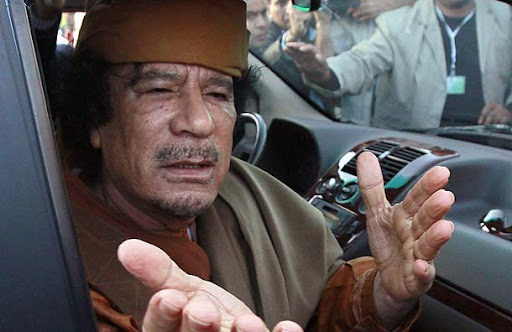 Libya's National Transitional Council believes the fugitive former dictator Moamar Gaddafi is in the loyalist-held town of Bani Walid, southeast of the capital, Tripoli.