Show Mobile Navigation

Monday, 22 August 2011

Embattled Libyan leader Moamar Gaddafi was out of sight as rebels took over Tripoli and arrested two of his sons, while world leaders urged the former strongman to go.

El NACHO - 17:00


Libyan rebel leader Mustafa Abdel Jalil hailed the end of the four-decade "Gaddafi era" on Monday, but urged rebels fighters to respect the law and promised fair trials for members of Gaddafi's government.
"I call on all Libyans to exercise self restraint and to respect the property and lives of others and not to resort to taking the law into their own hands," Mr Jalil told a news conference in the eastern city of Benghazi aired by Al Jazeera television.
He congratulated the Libyan people "for this historic victory" and thanked NATO for its military support, while cautioning that "the real moment of victory is when Gaddafi is captured".
Mr Jalil said he hoped Gaddafi, who faces an arrest warrant issued by the International Criminal Court, would be "captured alive so that he will be given a fair trial".
Two of his sons, Seif Al-Islam and Mohammed have already been captured, and another son, Al-Mutassim, was reported by Al Arabiya TV to be in the Bab al-Azizya compound in Tripoli.
The Western-backed rebels, whose grip around Tripoli tightened over the past two weeks before a final offensive on Sunday, said they were still encountering pockets of resistance, particularly around the Bab al-Aziziyah compound.
Gaddafi has not been seen in public since mid-June. His foes speculate he may not be in the Libyan capital, or even in the country.
He broadcast three defiant audio messages on Sunday, vowing he would not surrender and urging the people of Tripoli to "purge the capital", even as rebel forces swept through Tripoli and took over the symbolic Green Square.
French foreign minister Alain Juppe, whose government has been in the forefront of the international effort to oust Gaddafi, said Paris did not know where he was.
British prime minister David Cameron said London had no confirmation of his whereabouts either, adding Gaddafi's regime is in "full retreat" and he should give up any hope he has of clinging on to power.
"Gaddafi must stop fighting, without conditions, and clearly show that he has given up any claim to control Libya," he said.
US president Barack Obama said Gaddafi's 42-year autocratic regime was at a "tipping point" and that the "tyrant" must go, adding a call for the rebels to respect human rights and move to democracy.
"The Gaddafi regime is showing signs of collapsing. The people of Libya are showing that the universal pursuit of dignity and freedom is far stronger than the iron fist of a dictator," Mr Obama said in a statement.
Swift transfer
The International Criminal Court (ICC) is seeking the transfer of Seif al-Islam to The Hague to face charges of crimes against humanity.
Spokesman Fadi El-Abdallah told AFP the court was discussing his transfer with the Libyan rebel NTC.
Earlier on Monday, the court's prosecutor Louis Moreno-Ocampo said Seif al-Islam, 39, was arrested and in detention, calling for his swift transfer.
"We hope he can soon be in The Hague" to face judgement, Mr Moreno-Ocampo said.
Seif al-Islam is accused together with his father of orchestrating a plan to put down the Libyan revolt by "any means necessary" since it was sparked in mid-February.
This included the murder of hundreds of pro-freedom Libyan protesters and injuring hundreds of others when security forces shot a crowds using live ammunition, as well as the arrest and torture of numerous others.
Before the revolt erupted, Seif al-Islam was increasingly seen as a successor to his father, despite publicly ruling out any dynastic ambitions in the north African country.

Libyan rebels face pro-Gaddafi counter-attack in Zlitan

El NACHO - 16:41

Fierce fighting continued on Monday in Zlitan, 80 miles east of Tripoli, as forces loyal to Colonel Gaddafi resisted rebel forces advancing towards the Libyan capital.

As opposition fighters seized control of much of Tripoli, government forces counter-attacked in Zlitan, a town rebels captured on Friday.

Government forces, dug in along a line of hills south of Zlitan, fired a barrage of shells, killing a six-year-old child and wounding his three-year-old brother.

The three-year-old, Mohammed Halifa, was lying in a cot in Misrata's Mujamma Aledat hospital on Monday morning with both arms and hands bandaged, and a dressing on a wound caused by a shell splinter in the abdomen. He was sedated but appeared confused, trying to move his heavily bandaged arms and mouthing words.

"He was in the house when the hound [mortar] came in," said surgeon Dr Mohammed Ahmed. "I don't know why he [Gaddafi] is still killing. Gaddafi is lost, but these people are still killing. I don't know why." Ahmed said the boy's injuries did not appear life threatening.

Sources in Misrata, the base of the rebel force fighting in Zlitan, had earlier said they hoped to send a unit across the lines to meet government forces and negotiate their surrender.

But such plans appeared to be on hold on Monday afternoon as rebel reinforcements in black painted jeeps mounted with machine guns and recoilless rifles drove at speed up the main highway to Zlitan.

Misrata, along with Benghazi, had seen a night of wild celebrations. Fireworks and machine gun fire into the air started late on Sunday in reaction to news that rebel forces had entered Tripoli. Hospital officials said nine people were treated for minor burns from fireworks, some of which exploded amid the crowds.

Misrata military council confirmed that a unit of 200 rebel fighters landed by sea in Tripoli over the weekend, bringing weapons and ammunition for rebel fighters and including a team of medics.


Obama says Gaddafi rule collapsing, supports rebels

El NACHO - 14:01

U.S. President Barack Obama said on Sunday Muammar Gaddafi's rule was showing signs of collapse and called on the Libyan leader to relinquish power to avoid further casualties.

"The surest way for the bloodshed to end is simple: Muammar Gaddafi and his regime need to recognize that their rule has come to an end," Obama said in a statement. "Gaddafi needs to acknowledge the reality that he no longer controls Libya. He needs to relinquish power once and for all."

The United States has played a supporting role in the NATO campaign that started in March to protect rebels, protesters

and civilians from attacks by Gaddafi's forces, providing technical support and intelligence to help air strikes.

Obama has said the United States got involved to shield the Libyan people from humanitarian crisis, and pledged in his Sunday evening statement to stay involved after Gaddafi goes.

He called for the Transitional National Council rebels in Libya to take control upon Gaddafi's exit and do everything possible to avoid further casualties, preserve the remaining government institutions and commit to pursuing real democracy after decades of rule by the often erratic Libyan strongman.

"At this pivotal and historic time, the TNC should continue to demonstrate the leadership that is necessary to steer the country through a transition by respecting the rights of the people of Libya," Obama said in the statement issued during his annual holiday in Martha's Vineyard, an island near Boston.

"The United States will continue to stay in close coordination with the TNC. We will continue to insist that the basic rights of the Libyan people are respected. And we will continue to work with our allies and partners in the international community to protect the people of Libya, and to support a peaceful transition to democracy," he said.

POST-GADDAFI PLANNING

Earlier on Sunday, on his way into a seaside restaurant in the well-heeled town of Oak Bluffs, Obama told reporters he was waiting for a full picture of the upheaval in Libya to emerge before commenting on conditions there.

His written statement came shortly after TNC rebel forces streamed through the Libyan capital of Tripoli, waving flags and firing into the air.

The rebels said the city was under their control except Gaddafi's Bab Al-Aziziyah stronghold, according to al-Jazeera Television. Two of Gaddafi's sons were captured.

Western powers have been intensifying planning for post-Gaddafi Libya in recent days in response to a rapid succession of rebel victories around Tripoli, according to officials involved in the talks.

The NATO alliance on Friday authorized formal planning for post-Gaddafi Libya and TNC members were due to meet officials from the United States, Britain, Jordan and United Arab Emirates to discuss "day-after" planning in Dubai this week.

The White House believes that unless transition plans are firmed up quickly, post-Gaddafi Libya may be chaotic and it may be impossible to fulfill the West's promise to protect Libya's people from humanitarian crisis.

Some U.S. and European officials fear Libya's opposition movement is not fully ready to govern. Their hope is that enough of Gaddafi's institutions will remain intact to enable the formation of a transitional government that can maintain a measure of civil order.

On Sunday, the U.S. State Department repeated a call for Gaddafi to step aside.

"We continue efforts to encourage the TNC to maintain broad outreach across all segments of Libyan society and to plan for post-Gaddafi Libya," said State Department spokeswoman Victoria Nuland. "Gaddafi's days are numbered. If Gaddafi cared about the welfare of the Libyan people, he would step down now."


Britain accused Col Muammar Gaddafi of 'losing his grip' on reality as the Libyan dictator defied Nato air raids and rebel action on the streets of Tripoli by claiming to be in control of his capital.

El NACHO - 13:59

The Foreign Office Minister Alistair Burt said RAF fighter jets had played a "significant" role in Nato attacks on Col Gaddafi's forces in the last 24 hours.
The air assault, in which RAF Tornado GR4s struck with precision-guided Paveway bombs in and around Tripoli, came as pockets of rebels rose up overnight in neighbourhoods across the capital, sparking heavy street fighting for the first time in the city since the rebels took up arms.
Gunfire, anti-aircraft fire and explosions rang out across Tripoli as rebel commanders hailed the start of an attack on the dictator’s final stronghold.
But in a typically defiant audio message broadcast on state television early on Sunday, Col Gaddafi claimed to have repelled the rebels in the city.


Sunday, 21 August 2011

final battle for Libya was under way last night as advancing rebel forces routed loyalist troops on the outskirts of Tripoli and Nato declared Col Muammar Gaddafi’s regime was “crumbling”.

El NACHO - 22:37

Rebels claimed they encountered no resistance from Gaddafi forces as they were just four miles from the centre of the capital.
“Clearly we’re into the last stage of the regime – the writing is on the wall,” Oana Lungescu, the chief Nato spokesman, said. “We’re seeing people packing their bags – three top people defecting in the past couple of days, and Gaddafi-controlled territory shrinking before our eyes.”
Last night, residents of Tripoli took to the streets to celebrate the expected defeat of the regime.
After quickly consolidating their triumph in the key oil town of Zawiyah, 30 miles west of Tripoli, rebels have fought their way through towns on the capital’s western fringes as residents of the anti-regime eastern suburbs staged their own uprising.
Last night, rebels said regime forces were negotiating the surrender of the country’s main military airbase, Mitiga, in eastern Tripoli. They also claimed Gaddafi’s Presidential Guard had surrendered.


Libya: West Responsible for Death

El NACHO - 19:38

Libyan government spokesman told reporters in a news conference in Tripoli on Sunday that Western governments were responsible for innocent deaths in his country, naming US President Barack Obama, UK Prime Minister David Cameron and French President Nicolas Sarkozy.

made his statements as Libyan rebels battled their way towards Tripoli to help fighters inside the city who rose up overnight declaring a final showdown with Muammar Gaddafi.

Mr. Moussa said, "What is important now for NATO is for the Libyan government to fall. The human price is irrelevant,"
"Every blood -- every drop of Libyan blood -- shed by these rebels is the responsibility of the western world and especially NATO's countries. So we hold Mr. Obama, Mr. Cameron and Mr. Sarkozy morally responsible for every single unnecessary death that takes place in this country," he added,
"They have families, they have houses, they have their lives and they wholeheartedly believe that if this city is captured then the blood will run everywhere, so they may as well fight until the end."

In a co-ordinated revolt that rebel cells had been secretly preparing for months, shooting started on Saturday night across Tripoli moments after Muslim clerics, using the loudspeakers on mosque minarets, calling people on to the streets to gather.

The fighting inside Tripoli, combined with rebel advances to the outskirts of the city, appeared to signal the decisive phase in a six month conflict that has become the bloodiest of the "Arab Spring" uprisings that involves NATO powers.


Somali rapper K'naan visits famine-stricken homeland

El NACHO - 19:22

Somali-born rapper K'naan brought his waving flag back home Sunday, promising to help his countrymen as they struggle with a devastating famine that has killed tens of thousands of children.

The rapper, who left Somalia as a child more than two decades ago to settle in Canada, made a brief visit to Mogadishu on Sunday. He was mobbed by famine refugees who tried to shake his hand or hug him as he toured Mogadishu's Banadir Hospital and met with malnourished children.


Seychelles shark attack: Tests prove killer shark was a Great White

El NACHO - 19:20

Ian Redmond and Gemma Houghton (Pic:GemmaHoughton)

Ian Redmond and Gemma Houghton (Pic:GemmaHoughton)

A shark's tooth found lodged in the body of ­tragic ­honeymooner Ian ­Redmond is from a Great White, the Sunday Mirror can reveal.


A report sent by South African marine scientists to officials in the Seychelles says it has unmistakably ­serrated edges and a unique triangular shape, proving it belongs to the deadly predator.

It is news locals and ­holidaymakers have been fearing – but the Seychelles government is expected to cynically claim it is good for the ­isles as it means it is “not one of theirs” and may have left the area.

It comes as Ian’s shattered wife Gemma, 27, returned to Britain ­yesterday – making a heartbreaking visit to the cottage the couple had spent two years renovating ready to move into after their ­honeymoon.

Doctors removed the fragmented tooth from Ian’s body and sent ­images to the Natal Sharks Board in South Africa.

Great White Shark (Pic:Atlas Photography)

Scientists there found it matched the triangular razor-sharp teeth belonging to the predator which featured in Steven Spielberg’s Jaws horror films.

They have flown to the Seychelles to carry out further tests and help in the hunt for the shark, which also killed French tourist Nicolas ­Virolle two weeks before.

The teeth of a Great White are different to those of tiger or bull sharks, which are like a curved blade.

Using a complex formula in which the size of the tooth is measured to work out the length of the shark, scientists believe it’s a juvenile shark around 10 foot long.

Geremy Cliff from the Natal Sharks Board said: “The fragment, although very small, suggests the shark may be a Great White. We really need to examine the victim because it is better to see the ­actual wounds rather than ­photographs.

“The Seychelles government has asked us to assist in any way we can in finding the shark.

“We are not shark hunters. We are scientists and we want to help Seychelles authorities do what is best to protect their beaches.”

Ian, 30, was attacked on Tuesday at the idyllic resort of Anse Lazio beach on Praslin ­Island.

His wife Gemma was on the beach and heard his screams but was helpless to save him.

Despite the warning the shark is a Great White, ­officials will claim it is good news for tourism.

A Great White hasn’t been spotted there since 1938 and the government will insist that means the shark strayed in from foreign waters and has ­probably left.

A source said: “There is a sense of relief among the authorities that this is a Great White. The species has not been seen in the area for more than 50 years so officials ­believe it simply strayed in, launched a random attack and will be long gone. It’s not one of their sharks.”

However fishermen last night warned they face a race against time to catch the shark, which they ­believe will strike again in eight days’ time.

Darrel Green, the fisherman ­leading the hunt, has studied the sea patterns around island. He said: “We’ve studied the timing of the attacks. The Frenchman was bitten two days after the new moon, and Ian two days after a full moon. The next high tide like that one is around August 29. That’s when we expect to shark to come back and we are doing all we can to catch it.”

A £2,500 bounty has been put on the shark’s head by hotel owners desperate for tourists to visit.

Fishermen have placed 250 ­baited hooks where Ian was killed. One fisherman said: “We have to catch it. I’m not giving up. I’ll be out there every night and so will others. Everyone is afraid of the ­damage this can do to Seychelles.”

Reports have emerged to suggest it may have been lurking in the waters for more than six months.

Yesterday, a Facebook site RIP Ian Redmond was ­brimming with messages of sympathy.


Assad addresses Syria on TV as UN arrives in Damascus

El NACHO - 19:15

President Bashar al-Assad prepared to address his people as a UN team arrived in Damascus to assess humanitarian needs after five months of turmoil.

Assad's television interview, his fourth address during the growing revolt against his rule, will address "the current situation in Syria, the reform process and … implications of the US and western pressures on Syria politically and economically", the state media agency Sana reported.

Last week the US and leaders of the EU, including the UK, France and Germany, called for Assad to step aside amid an escalating military offensive since 31 July.

Activists said a clean-up operation was under way in places including the port city of Latakia as the UN delegation arrived in the country. But gunfire and arrests continued to be reported and a further 20 people, including five soldiers, died across the country on Saturday, activists said.

Assad has reportedly told the UN's Office for the Co-ordination of Humanitarian Affairs that it can travel to any part of the country it wishes, including Latakia, which was besieged by land and sea during a major security operation last week.

Before the planned visit to Latakia, a western diplomat said reports had been received of a large-scale clean-up of the al-Ramel Palestinian refugee camp in the city, which was heavily targeted.

"Reports of a clean-up square perfectly with the version of events which the regime is denying," the diplomat said. "But any attempts to whitewash and destroy evidence can only backfire on this isolated regime.

"The evidence in the form of personal testimonies of what happened in Latakia is overwhelming and undeniable. Assad can run but he can't hide from the arm of international law which is closing in on him."

Residents of Hama and Homs reported similar clean-ups by government officials after rampages through the cities by security forces in recent months.

As protesters waited for Assad's address, they said that nothing the embattled president announced would pull people off the streets. Despite international pressure, the violent crackdown has continued with more that 350 people said to have been killed this month – adding to a death toll of around 2,000.

The country's third city, Homs, was heavily targeted at the weekend with dozens of people killed and many more arrested, activists said.

A Homs resident said shooting had been heard inside a hospital and a prison. Residents, who fear a full-scale assault may be imminent, portrayed Homs as a city bracing itself for renewed destruction.

"There are snipers on all the buildings. The tanks aren't in the centre, but around the edges. There is a general strike and all the shops are closed. The situation is terrible – even after Assad says there aren't tanks and after Obama tells him to step aside," a resident told the Guardian.

International calls for Assad to leave have sharply intensified scrutiny of his regime and its sustained crackdown against demonstrators, which it continues to cast as a fight against terrorists.

The hardened western stance is set to greatly increase the stakes for Assad, who now faces pariah status among leaders whose attention he had previously coveted.

It has also for the first time raised the possibility of a Libyan-style military intervention, something that had not previously been considered despite five months of violence in which an estimated 2,500 people have died and which have all but shut down the Syrian economy.

A Guardian poll published at the weekend revealed that 80% of respondents supported some sort of military intervention in Syria. But there is no western appetite for military action in the densely populated, ethnically diverse country of 22 million and the vast majority of Syrians reject the idea.

A state-owned Syrian newspaper described the calls by Barack Obama, the German chancellor, Angela Merkel, the French president, Nicolas Sarkozy, and David Cameron as the "face of the conspiracy" it claims is being waged against it.

There are fears that western demands could embolden Assad, giving him little option but to fight as he struggles to retain control of the hardline police state his family has ruled as a personal fiefdom for more than four decades.

His traditional international support base remains resolute. Iranian support for the Assad regime is a key factor in calculations and Russia has said it does not support the call for Assad to leave.

Another one-time ally, Turkey, was on Sunday hosting a meeting of Syrian opposition groups who are attempting to elect a national council, as it too struggles to deal with the increasingly grave situation across its volatile border.

The body is attempting to position itself as an alternative leadership, in the same way that the National Transitional Council did in the weeks after Colonel Gaddafi was ousted from eastern Libya. That body eventually won international recognition. However, Syria's nascent opposition has struggled to gain momentum.

"The opposition is starting to realise that they cannot all be chiefs and that they have to live up to the expectations of the international community," veteran opposition figure Khaled Haj Saleh told Reuters.

The UN last week said it had identified 50 Syrian regime figures who may have committed crimes against humanity. In another sign of mounting international anger, the EU is considering placing a ban on Syrian oil exports, which account for 25% of the its economy. With industry at a standstill, no tourism, and cash reserves rapidly dwindling, such a move would likely prove difficult for Assad's regime to withstand in the long run


Libyan rebels close in on Tripoli

El NACHO - 18:59

Libyan rebels have captured a major military base which defends Muammar Gaddafi's stronghold of Tripoli.
The tide of the six-month-old civil war appeared to be turning quickly against the leader of more than four decades as clashes and protests raged in the streets of the capital.
Rebels rapidly advancing toward Tripoli took over the base of the Khamis Brigade, 16 miles west of the capital. After a brief gun battle, Gaddafi's forces fled what was once a major symbol of the regime's power.
Gaddafi's 27-year-old son Khamis commands the 32nd Brigade, also known simply as the Khamis Brigade, one of the best trained and equipped units in the Libyan military.
Inside the base, hundreds of rebels cheered wildly and danced, raising the rebel flag on the front gate of a large wall enclosing the compound. They seized large stores of weapons, driving away with truckloads of whatever arms they could get their hands on.
Ahmed al-Ajdal, 27, a fighter from Tripoli, was loading up a truck with ammunition.
"This is the wealth of the Libyan people that Gaddafi was using against us," he said, pointing to his haul. "Now we will use it against him and any other dictator who goes against the Libyan people."
In Tripoli, there was a second day of widespread clashes between what the opposition called "sleeping cells" of rebels who are rising up and Gaddafi loyalists. There were also large anti-government protests.
Rebels said on Saturday that they had launched their first attack on Tripoli in co-ordination with Nato and gunbattles and mortar rounds rocked the city. Nato aircraft also made heavier-than-usual bombing runs after nightfall, with loud explosions booming across the city.
On Sunday, more heavy machine gun fire and explosions rang out across the capital. Residents reported clashes in neighbourhoods all over Tripoli as well as the city's Mitiga military airport.


Saturday, 20 August 2011

Hand Lockerbie bomber to U.S.

El NACHO - 23:17

Libyan rebel forces were urged to hand over the Lockerbie bomber to the United States as it was confirmed Friday that he is being kept alive by a "wonder drug" developed in Britain.

Abdelbaset Ali Mohmed al Megrahi was freed by Scotland on compassionate grounds two years ago Saturday, when he was said to have just three months to live because of prostate cancer.

Roger Kirby, director of The Prostate Centre in London, said the decision was "foolhardy" and based on "flawed" medical advice. He believed the decision-makers were unaware of treatments such as abiraterone.

It costs around $5,000 a month and is not yet available to British patients. A source at the Tripoli Medical Centre said it was being used to prolong Megrahi's life.

Susan Cohen, 73, from New Jersey, lost her only daughter Theodora, 20, in the 1988 bombing which killed 270 people. She said she hoped the uprising would end with the death of Gadhafi, and with the rebels handing Megrahi to the American authorities.


Intense fighting in Libya as rebels near Tripoli

El NACHO - 23:13

Libyan rebels battled for towns on either side of the besieged capital Tripoli on Saturday, and fighting spilled across the border into Tunisia where Libyan infiltrators clashed with Tunisian troops.

This week’s rebel advances on Tripoli — Muammar Gaddafi’s last major stronghold — have transformed the war by cutting the capital off from its main road link to the outside world and putting unprecedented pressure on Gaddafi’s 41-year rule.

Washington says the veteran leader’s days are now numbered, and reports have emerged of more defections from Gaddafi’s ranks.
The six-month-old war came close to the Tunisian frontier after rebels suddenly seized the coastal city of Zawiyah just 50 km (30 miles) west of Tripoli, surrounding the heavily fortified capital and severing its vital supply routes.

In Tunisia, security sources said their forces had intercepted Libyan men in vehicles with weapons and fought them through the night in the desert. They reported several casualties, but did not say whether the fighters were Libyan rebels or pro-Gaddafi soldiers cut off from Tripoli.

Residents of the southern Tunisian desert town of Douz told Reuters by telephone that helicopters were swooping overhead and troops had been summoned from nearby towns to subdue the infiltrators, who rode in vehicles without number plates.

The imposition of a siege around Tripoli has trapped its residents and cut it off from fuel and food supplies. The International Organisation for Migration said on Friday it would organise a rescue operation to evacuate thousands of foreign workers, probably by sea.

Intense fighting continued in Zawiyah, home to an important oil refinery, on Saturday and rebels occupying the centre of the city said pro-Gaddafi forces showed no sign of retreat.

“Gaddafi will try to take back Zawiyah at any price. He will keep shelling the hospital,” said a rebel fighter as he prepared for midday prayers in the mosque of Bir Hawisa, a nearby village where many civilians are sheltering.

“We will not let that happen. We will fight.”

East of Tripoli, fighting has been bloodier and rebel advances far slower. On Friday, opposition forces fought street battles in the city of Zlitan but suffered heavy casualties, a Reuters reporter said. A rebel spokesman said 32 rebel fighters were killed and 150 wounded.

NATO warplanes have hammered Gaddafi military targets since March under a U.N. mandate to protect civilians. Gaddafi’s government has said the bombs have killed scores of innocent people, including 27 during a raid on Tripoli this week.

On Saturday, Libyan Prime Minister Al Baghdadi Ali Al-Mahmoudi spoke to U.N. General Secretary Ban Ki-moon by telephone requesting an investigation into alleged abuses by NATO, Libyan state news agency JANA reported.

JANA said Ban had promised to study the proposal.

In another potential blow to Gaddafi, a Tunisian source said Libya’s top oil official, Omran Abukraa, had arrived in Tunisia after deciding not to return to Tripoli from a trip to Italy.

If confirmed, it would be the third apparent defection of a senior Gaddafi associate this week. A senior security official arrived in Rome on Monday, and rebels said on Friday that Gaddafi’s estranged former deputy Abdel Salam Jalloud had joined their side in the western mountains.

The siege of Tripoli and the prospect of a battle for the capital have added urgency to the question of Gaddafi’s fate. The leader has repeatedly vowed never to leave the country and rebels say they will not stop fighting until he is gone.

A senior U.S. official said on Saturday that the opposition must prepare to take over power soon. The United States is among more than 30 nations that have recognised the rebels’ National Transitional Council (NTC) as Libya’s legitimate authority.

“It is clear that the situation is moving against Gaddafi,” U.S. assistant Secretary of State Jeffrey Feltman told a news conference after meeting Libyan rebel leaders at their headquarters in Libya’s eastern city of Benghazi.

“The opposition continues to make substantial gains on the ground while his forces grow weaker.”


A doctor has told of his battle to save a British man killed by a shark on his honeymoon.

El NACHO - 12:50


French surgeon Christian Renaud was on holiday in the Seychelles when he helped drag Ian Redmond onto a boat and tried to revive him after the attack.
In his account of the ordeal, published in French newspaper La Depeche, Dr Renaud said told how the 30-year-old let out a "scream of terror" before disappearing below the water.

He said: "Immediately the sea was like a lake of blood. The water was red. We will never forget it as long as we live. My family and I were very shocked. And that is saying something for a surgeon."

Mr Redmond was snorkelling off Anse Lazio beach on the island of Praslin when he was bitten.

Dr Renaud helped bring the victim to shore, where he said Mr Redmond's wife Gemma, 27, had witnessed everything.

"I massaged his heart for 20 minutes and we also gave him adrenaline, but he had already lost too much blood.

"There was no proper medical equipment and I couldn't revive his heart. Despite all my best efforts, I lost him."

The surgeon said a team of shark experts from the US had told him the creature was almost certainly a great white.

Dr Renaud, who was swimming in the same area on the day of the attack, also accused island officials of negligence for not warning tourists of the death of a Frenchman by a shark 15 days earlier.

Friday, 19 August 2011

Suicide bomber kills at least 34 at Pakistan mosque

El NACHO - 17:23

A suicide bomb blast at a mosque jammed with worshipers killed at least 34 people and injured 100 Friday in Pakistan's restive tribal region along the Afghan border, one of the deadliest recent attacks in the country.

At least 400 people filled a mosque near the town of Jamrud in the Khyber tribal district when the bomber walked into the hall and detonated his explosives, police and witnesses said. Khyber, the gateway into Afghanistan for NATO supply trucks, remains a stronghold for Taliban militants waging an insurgency against the U.S.-allied Pakistani government.


Worshipers who appeared at the mosque for Friday prayers were on their way out when the bomber showed up, witnesses said. Samiullah, who goes by one name, said a young man — whom he believed to be the bomber — cried out just before the blast.

Village elders said there was no security at the mosque, making it easy for the bomber to walk in undetected.

Pakistani television footage showed the walls and ceiling of the mosque pockmarked with shrapnel. Bloodied prayer caps were piled on shelves. Most of the wounded suffered burns. Many were taken to local hospitals in pickup trucks or cars because authorities lacked enough ambulances.

There was no immediate claim of responsibility for the attack.

In the past, Taliban militants and allied groups have struck at mosques in northwest Pakistan, particularly those believed to be affiliated with anti-Taliban tribes and militias. Last fall, a suicide bomber attacked a mosque in the village of Darra Adam Khel, where villagers had formed a militia to resist Islamist militants. At least 60 people were killed in that attack.

Khyber is one of several areas in northwest Pakistan where the Pakistani military has launched offensives in an attempt to bring an end to Taliban-engineered suicide bomb attacks and acts of terrorism that have ravaged the country in recent years. But many militants have been able to flee the military operations well in advance and find safe haven in other areas within the tribal belt.


Bombs Target Gadhafi's Main Compound in Libyan Capital

El NACHO - 17:20

Explosions rocked the Libyan capital, Tripoli, Friday as bombs fell near Libyan leader Moammar Gadhafi's main compound and several other areas of the city. Renewed fighting also was reported in the town of Zlitan between rebels and Gadhafi loyalists.

Libyan government spokesman Moussa Ibrahim condemned NATO, which has been helping the rebels with with a campaign of airstrikes. Ibrahim's criticism Friday came after reports that his brother had been killed in a NATO airstrike on the town of Zawiya on Thursday.

Fifty kilometers west of Tripoli, Zawiya was also the scene of renewed fighting between rebels and Gadhafi loyalists. Rebels said Thursday they had seized control of an oil refinery in Zawiya as well as Sabratha, a town west of Ziwaya.

The French news agency said the fighting in Zlitan, east of Tripoli, erupted when rebels launched an assault on the town center.

NATO began launching airstrikes against Libya in March, supporting the rebels who have been fighting against Gadhafi's 42-year rule.

Also, the International Organization for Migration has launched an effort to evacuate "large numbers" of foreigners from Tripoli. The relief group said Friday that foreign nationals in the capital were becoming "increasingly vulnerable" and now want to leave.


Syrian forces shot dead six protesters on Friday despite President Bashar al-Assad's pledge

El NACHO - 14:42

Syrian forces shot dead six protesters on Friday despite President Bashar al-Assad's pledge that his military crackdown on dissent was over, as thousands marched across the country spurred on by U.S. and European calls for him to step down.

The shooting broke out on Friday in the southern province of Deraa where the five-month uprising against Assad erupted in March, triggering a brutal response in which U.N. investigators say his forces may have committed crimes against humanity.

"We have names of four confirmed dead protesters in Inkhil and reports of heavy firing on demonstrations by the security forces across Deraa's countryside," Abdallah Aba Zaid, a prominent local activist, told Reuters.

Thamer Jahamani, a lawyer, said two other people were killed when security forces opened fire on a demonstration in the town of Hirak. Dozens of people were wounded, he said.

The main midday Muslim prayers held on Friday have been a launch pad for huge rallies across Syria and have seen some of the heaviest bloodshed, with 20 people killed last week in defiant protests chanting: "We kneel only to God."

Assad, from the minority Alawite sect in the majority Sunni Muslim nation, told U.N. Secretary-General Ban Ki-moon this week that military and police operations had stopped, but activists say his forces are still shooting at protesters.

"Maybe Bashar al-Assad does not regard police as security forces," said a witness in Hama, where security force fired machine guns later on Thursday to prevent a night time protest.

Syrian state television said gunmen attacked a police post in Deraa province, killing a policeman and a civilian, and wounding two others.

Syria has expelled most independent media since the unrest began, making it difficult to verify reports of violence in which the United Nations says 2,000 civilians have been killed. Authorities blame terrorists and extremists for the bloodshed and say 500 soldiers and police have been killed.

SNIPERS ON ROOF

Internet footage of Friday's protests suggested that although widespread they were smaller than at their peak in July, before Assad sent tanks and troops into several cities.

A doctor in Zabadani, 30 km (20 miles) northeast of Damascus, said army vehicles were in the town and snipers were on the roof to prevent crowds marching.

Protesters from Syria's Sunni majority resent the power and wealth amassed by some Alawites, who adhere to an offshoot of Shi'ite Islam, and want Assad to quit, the dismantling of the security apparatus and the introduction of sweeping reforms.

The violent repression prompted coordinated calls from the United States and European Union on Thursday for Assad to step down and Washington imposed sweeping new sanctions on Syria, which borders Israel, Lebanon and Iraq and is an ally of Iran.

There is no immediate obvious alternative leader to Assad although the disparate opposition, persecuted for decades, has gained a fresh sense of purpose as popular disaffection has spread across the country.

President Barack Obama ordered Syrian government assets in the United States frozen, banned U.S. citizens from operating or investing in Syria and prohibited U.S. imports of Syrian oil products.

"The future of Syria must be determined by its people, but President Bashar al-Assad is standing in their way," Obama said. "His calls for dialogue and reform have rung hollow while he is imprisoning, torturing and slaughtering his own people."

Diplomats said the European Union could decided to toughen sanctions to match the U.S. measures, including a ban on oil imports. Syria exports over one third of its 385,000 barrels per day oil production to Europe.

Adding to international pressure, U.N. investigators said Assad's forces had committed violations that may amount to crimes against humanity. The United Nations plans to send a team to Syria on Saturday to assess the humanitarian situation.

Simultaneously, European Union foreign policy chief Catherine Ashton called on Assad to step aside and said the EU was preparing to broaden its own sanctions against Syria.

The United States, Britain and European allies said on Thursday they would draft a U.N. Security Council sanctions resolution on Syria.

But Russia, which has resisted Western calls for U.N. sanctions, said on Friday it also opposed calls for Assad to step down and believed he needs time to implement reforms.

"We do not support such calls and believe that it is necessary now to give President Assad's regime time to realize all the reform processes that have been announced," Interfax news agency quoted a foreign ministry source as saying.

SANCTIONS IMPACT

Despite the dramatic sharpening of Western rhetoric, there is no threat of Western military action like that against Libya's Muammar Gaddafi, meaning Assad's conflict with his opponents seems likely to grind on in the streets.

It may also take time for the diplomatic broadside, backed by the new sanctions, to have an impact on the 45-year-old president who took power when his father President Hafez al-Assad died 11 years ago after three decades in office.

Assad has so far brushed off international pressure and survived years of U.S. and European isolation following the 2005 assassination of Lebanese statesman Rafik al-Hariri, a killing many Western nations held Damascus responsible for.

But Syria's economy, already hit by a collapse in tourism revenue, could be further damaged by Obama's announcement. U.S. sanctions will make it very difficult for banks to finance transactions involving Syrian oil exports.

It will make it also challenging for companies with a large U.S. presence, such as Shell, to continue producing crude in Syria -- although the impact on global oil markets from a potential shutdown of Syria's 380,000 barrels per day oil industry would be small compared to that of Libya.

Assad says the protests are a foreign conspiracy to divide Syria and said last week his army would "not relent in pursuing terrorist groups."

U.N. investigators said on Thursday Syrian forces had fired on peaceful protesters, often at short range. Their wounds were "consistent with an apparent shoot-to-kill policy."

Two women from Northern Ireland have been stabbed to death in Turkey.

El NACHO - 14:39


It is understood they were killed on Thursday night in the city of Izmir, about 75 miles from the resort of Kusadasi.

Their names have not been released but the women, in their 50s, are thought to be from County Down.

A 17-year-old Turkish boy has been arrested. The women were travelling on Irish passports and diplomats from Dublin are liaising with their relatives.

It is understood that Turkish police are investigating claims the stabbing happened after a row between the suspect and the mother of a girl dating him.

One of the women had worked as a lecturer in a further education college in Co Down.

Other members of their families on holiday in Kusadasi have travelled to Izmir along with a Turkish friend and local hotelier.

Officials from the Irish Embassy in Ankara arrived in Izmir to meet the families, the Department of Foreign Affairs in Dublin said.

The SDLP assembly member for Newry and Armagh, Dominic Bradley, said the whole area around Newry and Mourne was "totally stunned by the news from Turkey".

He said: "Their families are very much in the thoughts and prayers of people in this part of the world. I know that the people here will rally round the families and give them all the support they are going to need."

It is understood one of the women owned a property in the Kusadasi area. The Turkish Aegean is one of the most popular sun holiday destinations for tourists from Northern Ireland.

Saturday, 6 August 2011

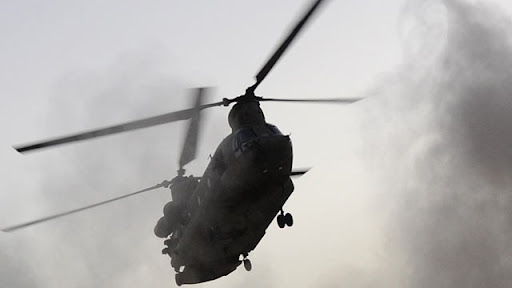
Nato Chinook helicopter has been shot down by Taliban insurgents, killing 30 American troops

El NACHO - 19:18

The aircraft was hit by a rocket-propelled grenade and crashed in the Tangi valley of Wardak province, west of the Afghan capital, Kabul.
A condolence statement from Hamid Karzai said 31 Americans had been killed - including one interpreter - and seven Afghans, making it the bloodiest incident for the United States and the coalition in the decade-long campaign.
Coalition head quarters in Kabul confirmed a helicopter had crashed in eastern Afghanistan, but a spokesman would not comment on casualty figures.
Sources said the release of more information was being delayed by the difficulties in informing the next of kin.
The spokesman said: “A [coalition] helicopter crashed in eastern Afghanistan today, and recovery operations are under way.

“[The coalition] is still in the process of assessing the circumstances to determine the facts of the incident, reporting indicates there was enemy activity in the area.
“Additional details will be released as appropriate.”
Mr Karzai’s statement said: “The president of the Islamic Republic of Afghanistan Hamid Karzai expressed condolences over a Nato helicopter crash and the deaths of 31 members of US special forces."
Wardak is viewed as a strategically critical province guarding the western “gate” to Kabul and has seen heavy Taliban infiltration for several years.
Local reports said the helicopter had been taking part in a night raid targeting insurgent commanders. At least eight insurgents were killed.
A spokesman for the Taliban, Zabiullah Mujaheed, told the New York Times insurgents shot down the helicopter around 11pm on Friday local time and that eight militants were killed in the fight that continued after the helicopter fell.
“The fresh reports from the site tells us that there are still Americans doing search operations for the bodies and pieces of the helicopter are on the ground,” Mr. Mujaheed said.


Friday, 5 August 2011

Libya rebels say Gaddafi’s son killed by Nato

El NACHO - 14:44

Libyan rebel spokesman said on Friday that a Nato air attack had killed 32 people, among then Colonel Muammer Gaddafi’s son Khamis, who serves as one of the main commanders of the Libyan leader’s military forces.
The rebel spokesman said the air strike had taken place at Zlitan, a frontline town where some of Col Gaddafi’s most loyal and best equipped troops are making a stand to defend the outskirts of Tripoli, 160km away.
More


A Nato official at operations headquarters in Naples said he was aware of the report but could not confirm it.
“We cannot confirm anything right now, because we don’t have people on the ground, but we are trying to find out what we can,” he said.
There was no immediate comment from the Tripoli government.
If confirmed, the death of Khamis Gaddafi would be a severe blow to the leader’s bid to resist a six-month-old Nato-backed uprising and remain in power.
Khamis is head of Libya’s 32nd Brigade, one of Col Gaddafi’s most professional and loyal units, which has been fighting in Zlitan, which lies between the rebel-held city of Misrata and the capital Tripoli.
The Gaddafi government said earlier this year that a Nato air strike had killed another of Col Gaddafi’s sons, Saif al-Arab, who had a much lower public profile and no significant leadership role.
Rebels who cleared Col Gaddafi’s forces from Libya’s third largest city of Misrata have been trying for weeks to push westwards and take Zlitan, which would open the coastal road towards his Tripoli stronghold.


Monday, 1 August 2011

Syrian tanks and troops mounted an all-out assault on the city of Hama yesterday,

El NACHO - 00:16

 killing scores of people on the eve of Ramadan, the holiest month in the Islamic calendar.

Government forces swarmed through the city before dawn, after a month-long siege, in what many activists believe was an attempt to crush one of the main centres of protest to the rule of President Bashar Assad in the four-month uprising. There were reports of bodies lying in the streets and snipers were seen firing at protesters from rooftops.

Residents fought back against the tanks with petrol bombs, stones and sticks, according to witnesses.


The operation appeared to be part of a co-ordinated operation on opposition strongholds across the country that left at least 62 people dead, according to witnesses and rights groups. An activist from Hama, who spoke by phone to The Independent, said it had been impossible to rescue some of the injured who were lying in the roads.

"There has been shooting all over the city," said the man, who asked not to be named. "At least one mosque was hit. The security services were surrounding one of the hospitals and were not letting some of the protesters in."

Video loaded on to YouTube yesterday showed doctors trying to revive badly wounded civilians. There were reports that some hospitals were seeking blood donations to help the injured, while gunmen from the feared "shabiha" militias, loyal to the president, were seen roaming the streets.

Hama was the scene of a massacre in 1982 when the current president's father attempted to crush a Muslim Brotherhood uprising. "We got told that Bashar al-Assad was going to deal differently with Hama," said another civilian from the city who spoke to The Independent. "This is what he meant."

Condemnation of the operation was swift. President Barack Obama said he was "appalled" by the crackdown and British Foreign Secretary William Hague said the assaults on civilians were "all the more shocking" because they happened on the eve of Ramadan. Raids were also reported in the suburbs of the capital, Damascus – where witnesses said the security services had injured dozens after throwing a nail bomb at protesters – while in the eastern city of Deir al-Zour at least seven people were killed by soldiers firing machine-guns from tanks.

In Hama, where the worst of the violence occurred, the death toll was estimated to be 49. "It's a massacre. They want to break Hama before the month of Ramadan," a witness told the Associated Press.

Large-scale political gatherings have for decades been banned in Syria by the ruling Ba'ath party. But during Ramadan many Muslims gather in the mosques after breaking their daily fast, and analysts believe some protesters will use the holy month to foment further unrest.

"The Army is trying to clear Hama and a lot of other areas held by protesters so they control those areas during Ramadan," said Andrew Tabler, a Syria expert from the Washington Institute for Near East Policy.

"That they are doing it on the eve of the Muslim holy month threatens to supercharge already high sectarian tensions throughout the country."

Europe and America have hit the Assad regime with a raft of sanctions, but have otherwise appeared powerless to stop a bloody campaign of state violence, which some activists say has killed more than 1,600 people.

Next Previous
Editor's Choice